A drawing made on a computer is finished before it is understood. Lines are exact from the first moment, dimensions are true, and the whole thing has the appearance of a decision when it is still a guess.
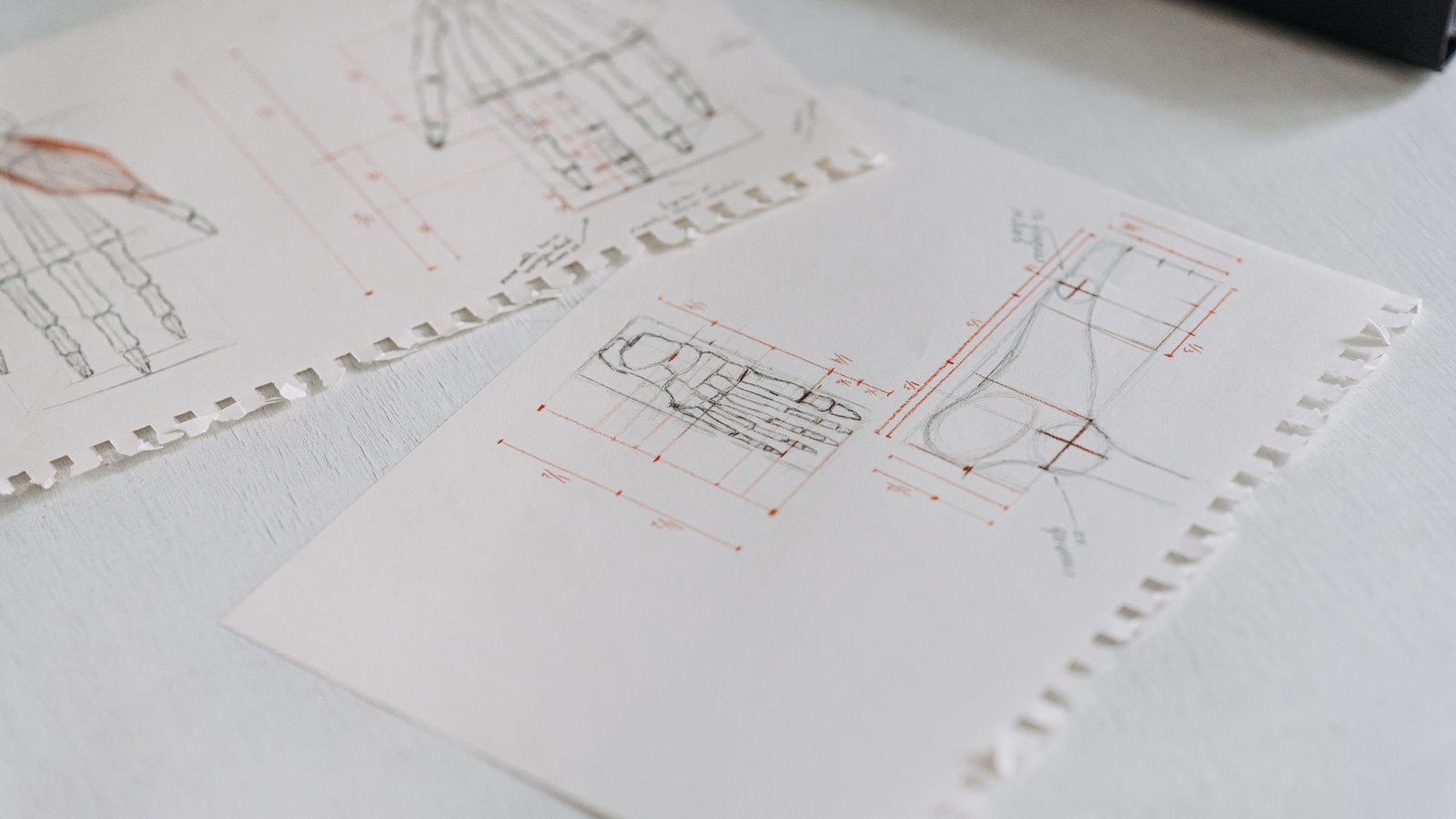
A hand drawing declares its own uncertainty. A wall drawn quickly is obviously provisional. You can see, in the weight of the line, how sure the person was, and so can they. That is information which the CAD file deletes.
A drawing made on a computer is finished before it is understood.
We start every project with two weeks of sketching at 1:200 and 1:100, and we start every difficult junction with a 1:5 by hand. Then everything gets modelled properly, coordinated, clash-checked, and issued — we are not romantics about the production side.
The second half of the argument is about models. Any disagreement in this studio that survives two meetings gets built at 1:20. It ends the argument in an afternoon, almost always in favour of whoever was right, and often in favour of a third option nobody had drawn.
There is an obvious efficiency objection. Making a model costs three days that a rendering costs three hours. But the rendering answers a question you already asked, and the model answers questions you did not know to ask — how does the light actually fall on that reveal, is that overhang absurd, can you get a hand in there.
What we have settled on is a division of labour. Hand for thinking, model for arguing, computer for building. The order matters more than the tools.